Bryce Harper Wants You to Know He Has Nothing to Do With FanDuel
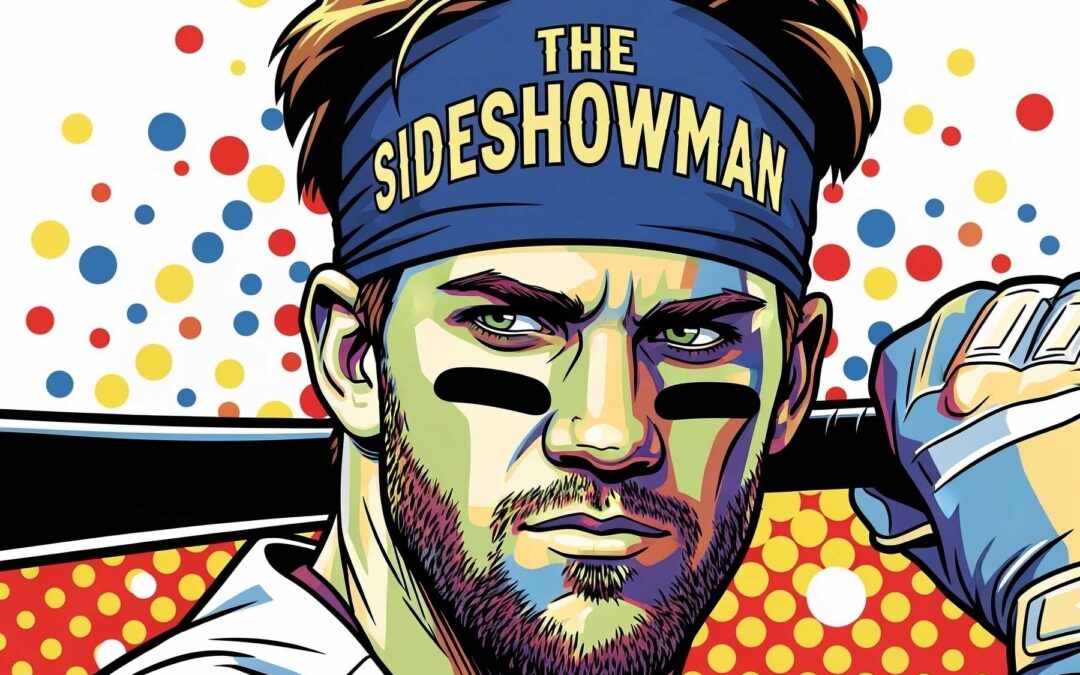
Bryce Harper is having a busy week in South Philly. Hours before he was scheduled to step into the box for the Home Run Derby at Citizens Bank Park, the Phils’ two-time NL MVP and perennial Gold Glove contender had to take a break from All-Star Week to address a PR nightmare he didn’t create.
The Philadelphia Inquirer broke the story: a viral 21-second Cameo video surfaced showing Bryce wishing a happy Thanksgiving to someone named Terry. The message to Terry was ordered by an acquaintance named “Bryttani.”
As it turned out, Bryttanni was a FanDuel associate who had ordered a cheap personal video through Cameo’s consumer portal to retain Terry as a high-rolling FanDuel client. It’s unclear how, but before sending it to the bettor, someone on Bryttanni’s team superimposed the FanDuel logo over Harper’s face, transforming a personal shout-out compliant with Cameo’s Terms of Service into an unlicensed piece of corporate marketing collateral.
Bryce immediately took to his Instagram story to set the record straight. Bryttanni ordered a cheap personal Cameo—not a commercial business video—complete with a short script, which he read in good faith. He had zero knowledge of Bryttanni’s high-roller client (who, it turns out, is in an $18.5 million financial hole with the sportsbook, and has since filed a federal product liability lawsuit against them), never approved slapping the FanDuel logo over his likeness, and has no partnership with the sportsbook whatsoever. “Had I known FanDuel’s true intent, I would not have made the video,” Harper bluntly stated.
Putting aside the obvious violations of Name, Image, and Likeness (NIL) protocols and the strict contractual boundaries that govern professional athletes, what an absolute, catastrophic failure of marketing leadership. Somebody at FanDuel who knew better—or certainly should have known better—was completely asleep at the wheel while an associate went rogue, demonstrating zero real-world sensibility regarding the very boring but very serious legal realities of content creation.
Will TikTok’s Legacy be the Death of Intellectual Property?
To understand how an associate may have felt emboldened to casually hijack one of the most famous faces in baseball for an unlicensed corporate promotion, you have to look at the media ecosystem they grew up in.
Scholars generally agree we are living through an epidemic of media illiteracy, driven in no small part by the architectural DNA of short-form video. When TikTok crept into the U.S. market via the App and Google Play stores, its proof-of-concept was Douyin—a Vine-inspired revival app from China. The core thesis was simple: karaoke, lip-syncing, and dance choreography drive massive consumption. By tapping into the primal human desire to belong, fit in, and be seen as trendy, the app became an unstoppable, self-driving product engine.
There is, however, a massive structural problem when you import that thesis into American business.
Intellectual property laws in China are vastly different from IP laws in the United States. To be polite about it: China, compared to the U.S., historically does not treat intellectual property with the same…legal reverence. So, inevitably, on a platform built on Douyin’s foundation, the distinction between copying someone else’s dance choreography and straight-up plagiarizing their copyrighted script has slowly eroded to nil. Or at least it has in the minds of TikTokers.
Fast-forward to today, and creators steal content from each other constantly. Is it even stealing anymore? Or are we all just “jumping on a trend”? The line, TikTok would have us believe, has blurred into non-existence. When you combine that TikTok-induced urge to co-opt content with the Cameo’s rapid, low-cost access to custom content from major celebrities, you get a dangerous corporate blind spot. You end up with well-meaning but unwitting marketers who genuinely do not understand why slapping a corporate logo over a paid personal greeting creates far more liability than opportunity.
The “Coffee Break Drill” Every CMO Needs to Run
IP law in the U.S. is slowly catching up. Still, intellectual property law is notoriously difficult to enforce. You can’t just call the cops if someone steals your brand assets or co-opts your likeness. You need a private army of lawyers and investigators to monitor the market, fire off cease-and-desist letters, and aggressively interrupt theft. If you don’t vigorously defend your IP, you risk diluting your legal rights. Then, when you eventually end up in court, a judge will look at your lax enforcement and say: If you didn’t care enough to protect it then, why should I care now?
This brings us to the last person any marketing director ever wants to call their audience: a judge. The Harper v. FanDuel debacle provides a perfect opportunity for corporate marketing leaders to run what the fire service calls a “Coffee Break Drill.” Grab your team, sit down over coffee, and run a hypothetical post-mortem on your own departmental workflows.
Who is actually in charge of what? If an associate buys an asset or spins up a quick digital promo, where is the legal checkpoint? What happens if a rogue employee orders an unlicensed video asset, drops the file onto an internal corporate server or Digital Asset Manager, and tags it for general use?
Rapid approval processes are absolutely vital to stay competitive, but speed can never replace the intentionality of a multidisciplinary review. If one of your team members went rogue tomorrow and co-opted copyrighted material, even just to hop on a trend, would you be able to defend your compliance protocols? To management? To opposing counsel? To a judge?
Experience Is Not a Legacy Metric
We cannot count on tech platforms to teach young users how to respect intellectual property or be skeptical of digital media. The inherent goal of any algorithmic feed is the exact opposite: keep users consuming, remixing, and uploading without friction.
That friction, however, is exactly what protects a corporation from liability. Which leaves marketing directors with an uncomfortable question: How sure are you that you have the right people, with the right experience, in charge of the right things?
I drive a car every single day, but I’m sure as hell no mechanic. You simply cannot assume someone is a hawkish, diligent, and shrewd content strategist just because they grew up on TikTok.
Navigating algorithm trends takes skill, but understanding the legal, ethical, and brand boundaries of commercial content requires seasoned, real-world experience.
When Rogue Marketing Creates MLB-Sized Adversaries
To make matters worse for FanDuel’s legal defense, Cameo itself is completely insulated from the fallout. Under Cameo’s Terms of Service, personal video shout-outs are explicitly licensed, not sold, and carry a binding prohibition against any business or promotional business use. When an associate bypasses a Cameo for Business license and repurposes a cheap consumer greeting for corporate retention, the platform’s terms of service place 100% of the legal liability and indemnification squarely on the buyer who breached the contract.
Consider the nightmare that FanDuel’s executive stakeholders and marketing leadership are facing right now. The absence of basic legal and editorial guardrails allowed an unsupervised employee to co-opt the likeness of one of the most celebrated athletes of his generation. They have taken a powerful figure like Bryce Harper, backed by the immense financial, legal, and institutional resources of Major League Baseball, and actively antagonized him while already defending against a messy federal product liability lawsuit. What should have been a routine VIP client retention tactic has instead manufactured a formidable institutional adversary who has every legal right, and every financial incentive, to hold them publicly accountable.
If you were served tomorrow with a federal lawsuit alleging an intellectual property infraction or outright theft, would you be confident defending your internal review process under oath? Or would you be left trying to explain to a judge how an unsupervised associate traded your brand’s reputation for a cheap digital shortcut?
About The Author